Vancouver, BC to Mt. Baker: Border Crossing and Drive Guide
The Sumas crossing, the 32-mile run up SR 542, and the CBSA duty-free rule that catches day-trippers — what a BC driver needs before heading to Baker.
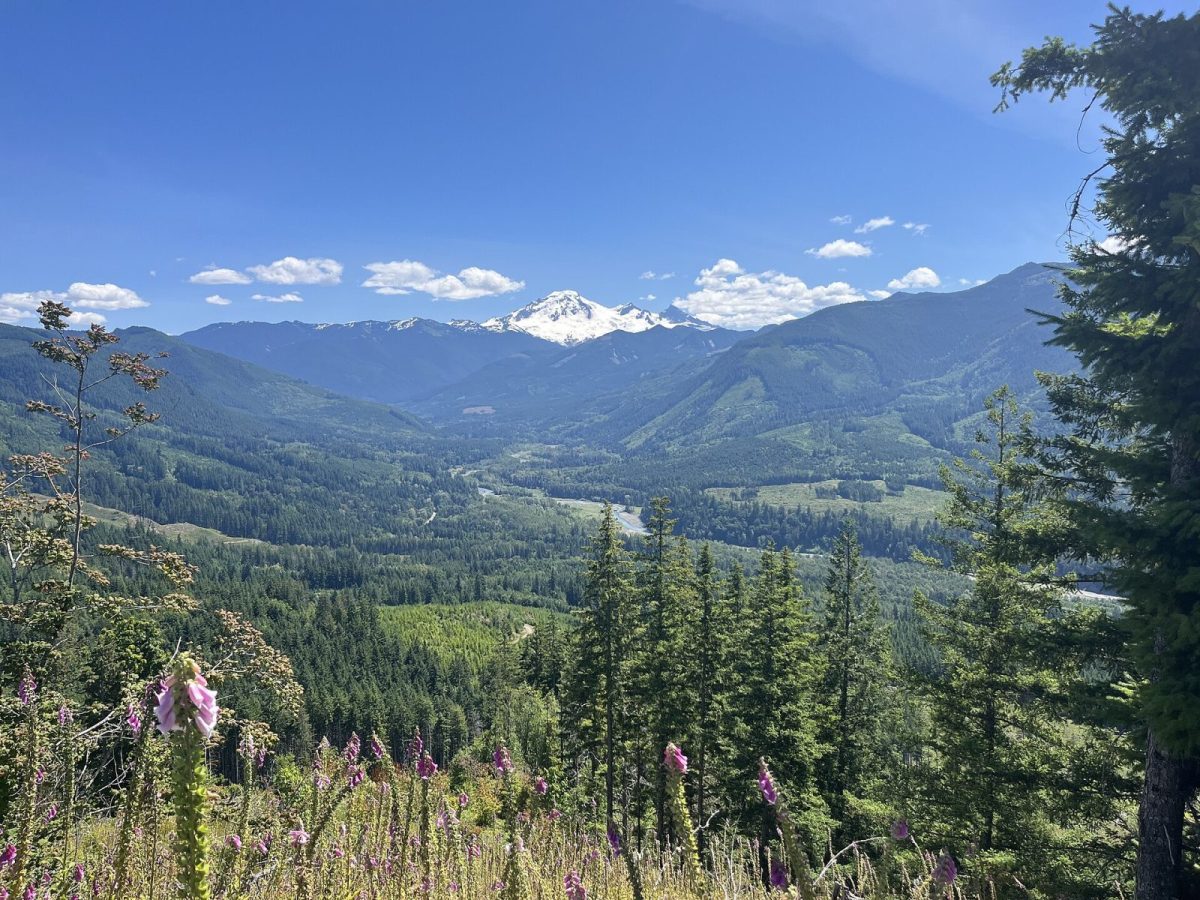
Budget 2.5 to 3-plus hours door to door, including the border. The route is BC-1 East to Exit 92, across at the Sumas–Huntingdon crossing, south on WA-547 to a traffic circle, then 32 miles east on SR 542 to the mountain. The crossing itself is open 24 hours on both sides. The variable is the line at the booth, not the driving.
That's the mechanical answer. The part that actually changes your trip planning is what Canada lets you bring home afterward, and it hinges on a number most day-trippers never check: how many hours you were gone.
The route, turn by turn
From Vancouver, take the Trans-Canada Highway (BC-1) east to Exit 92, marked for the US border. Cross at Sumas–Huntingdon. On the US side, pick up WA-547 south, follow it to a traffic circle, and continue onto SR 542 eastbound. From there it's 32 miles to Glacier and on toward the ski area.
This route bypasses Bellingham entirely — you join SR 542 well east of I-5, so there's no reason to detour through the city unless you specifically want its services. That matters, because Bellingham is where the fact brief locates the last hospital, airport, and full grocery chains on this corridor. Past the border, your last meaningful stop for groceries or a pharmacy is nothing at all until Bellingham, roughly 45–60 minutes back the way you came. Glacier, the last settlement before the mountain, has restaurants and a general store but no pharmacy, no urgent care, and no full grocery.
Fuel is worth planning around too. Maple Falls has the last gas before the mountain, and it closes on Sundays. If your trip lands on a Sunday, fuel up before you reach Maple Falls.
The Sumas–Huntingdon crossing
Sumas–Huntingdon runs 24 hours a day on both the Canadian and US sides, and it has a dedicated NEXUS lane. That's the single biggest lever you have over your own wait time. On an ordinary weekday the crossing can be quick. On a powder Saturday, when half of Vancouver's skiers have the same idea, the regular lanes back up — sometimes badly. Check live conditions at bwt.cbp.gov before you leave the house, not after you're already in line. For a deeper look at timing patterns and what NEXUS actually saves you, see our guide to the Sumas crossing.
If Mt. Baker is going to be a repeat destination rather than a once-a-season trip, NEXUS pays for itself in avoided wait time — it matters most on exactly the weekends you're most likely to be driving down, when everyone else without it is stacked up in the regular lane.
What you can bring back into Canada
This is the detail that trips up more day-trippers than anything about the drive itself. The Canada Border Services Agency sets personal exemptions based on how long you were out of the country — not on what you bought or how much you spent within some vague sense of "reasonable."
| Time out of Canada | Duty-free allowance | What's included |
|---|---|---|
| Under 24 hours | None | Everything must be declared and is subject to duty and tax |
| 24–48 hours | CAD $200 | Alcohol and tobacco are not included in this allowance |
| 48 hours or more | CAD $800 | Includes up to 1.5 L wine, 1.14 L spirits, or 8.5 L beer, plus 200 cigarettes, 50 cigars, or 200 g tobacco |
Read that top row again, because it's the one people miss. A day trip — drive down, ski, drive home the same day — puts you under 24 hours out of the country, which means your exemption is not small. It's zero. Every dollar you spent, from lift tickets that don't count as goods to the fudge you bought in town, technically falls under "must be declared," and CBSA officers do ask what you bought.
Day trip vs. overnight: what actually changes
The practical difference isn't subtle once you see the thresholds side by side.
Under 24 hours (a day trip): No exemption at all. Keep this in mind before you load up on gear, groceries, or duty-free-adjacent purchases on the US side — there's no allowance to offset it.
24 to 48 hours (one night): You clear the first threshold. CAD $200 in goods comes back duty-free, but that figure excludes alcohol and tobacco entirely — a bottle of wine picked up in Washington doesn't fit inside that $200, it's simply dutiable on top of it.
48 hours or more (two nights): The full $800 exemption applies, and this is the tier that actually includes alcohol and tobacco in meaningful quantity — 1.5 liters of wine, 1.14 liters of spirits, or 8.5 liters of beer, plus a tobacco allowance. If you're planning to bring liquor home from a Washington trip, this is the length of stay that makes it worthwhile.
In plain terms: the math rewards staying two nights over one, and staying one night over none. A weekend in cabins near Glacier is long enough to clear the 48-hour line and come home with the full $800 exemption, alcohol included — something a same-day ski run to Baker simply can't do, no matter how good the snow was.
A worked example: how the hours actually stack up
Say you leave Vancouver Friday evening, cross at Sumas around 6 p.m., and don't head back across the border until Sunday afternoon. That's roughly 46 hours out of the country — just short of the 48-hour line, which lands you in the $200 tier, alcohol and tobacco excluded. Push the return to Sunday evening instead and you clear 48 hours, unlocking the full $800 exemption with wine, spirits, or beer included. The difference between those two trips, in practical terms, is a few hours of driving time and one extra evening at the cabin — and it's the difference between $200 in general goods and $800 that can include a case of beer or a bottle of good Scotch.
This is also why a one-night trip is worth planning around the clock rather than the calendar date. "Friday night to Saturday night" and "Friday night to Sunday morning" both read as one-night stays, but only one of them might clear 24 hours depending on your exact crossing times. Track the hour, not just the night count.
Planning around the season
The drive itself doesn't change much with the seasons, but what's open at the other end does. Mt. Baker Ski Area typically runs late November into late April, with lifts operating 9:00 a.m. to 3:30 p.m. daily. In summer, the final stretch of road beyond Heather Meadows to Artist Point only opens once crews clear the winter's snowpack — it opened 10 June in 2026 and 27 June in 2025, and closes again with the first significant fall snowfall, so a July or August trip has a very different mountain waiting at the top than an October one. If your visit is built around a specific activity rather than just "seeing the mountain," check which season you're actually driving into before you lock in dates.
None of the five cabin communities on this corridor offer ski-in/ski-out access — Mt. Baker Ski Area is strictly day-use, with no lodging on the mountain itself. Glacier, the closest settlement, sits about 17 miles and 30 minutes from the ski area by road, so wherever you stay, plan on a drive to the lifts each morning rather than walking out your door onto a run.
Is skiing Baker as a day trip still worth it?
Plenty of Vancouver skiers do exactly this, and the exemption rules don't make it a bad idea — they just mean you shouldn't expect to bring much back. If your trip is genuinely about the mountain and not about shopping, the day-trip math is irrelevant to you. If part of the appeal is stocking up on anything dutiable, the calculation above should factor into whether you stay over. Our day trip vs. overnight comparison goes further into what you gain by staying rather than driving home the same night, beyond the customs math.
Winter driving on the US side
SR 542 above Glacier climbs steadily, narrows, loses lighting, and often carries a packed layer of snow through the winter months. Washington posts traction requirements in three tiers: Level 1 requires traction tires unless you're in a 4WD or AWD vehicle with adequate tread; Level 2 requires chains except for 4WD/AWD; Level 3 requires chains for every vehicle, 4WD and AWD included. These restrictions are posted per-route in real time, so check WSDOT's SR 542 alert page before you leave rather than assuming last week's conditions still apply. Carry chains regardless of what you're driving — a 4WD exemption from a chain requirement isn't a guarantee you won't need them.
Cell coverage on this stretch is worth knowing about before you're relying on a phone for navigation or a conditions check. Service degrades noticeably past Glacier; our cell service guide covers exactly where it holds and where it doesn't, and what to download before you cross the border.
What to have ready at the border
Standard travel documents apply for any land crossing between Canada and the US — bring whatever you'd normally carry for cross-border travel, and have it accessible before you reach the booth rather than digging through a bag while the officer waits. If you're travelling with a dog, the requirements are different enough from a routine crossing that they deserve their own read; see our guide to crossing with a dog before you go.
FAQ
Is the Sumas–Huntingdon crossing open 24 hours?
Yes, on both the Canadian and US sides. There's no time-of-day restriction on when you can cross — the only variable is how busy the lanes are.
Do I need NEXUS to cross at Sumas?
No. A NEXUS card gets you into a dedicated lane that's typically faster, which matters most on busy ski weekends, but it isn't required to use the crossing.
How long is the drive from Vancouver?
Budget 2.5 to 3-plus hours including the border crossing. The SR 542 portion alone, from the traffic circle past WA-547 to the mountain, is 32 miles.
What happens if I only go for the day and don't declare anything I bought?
Under-24-hour trips carry no duty-free exemption, and CBSA officers do ask what you purchased. Keep receipts and declare accurately rather than assuming small purchases go unnoticed.
Does staying one extra night really change what I can bring home?
Yes, materially. One night (24–48 hours) unlocks a $200 exemption that excludes alcohol and tobacco. Two nights (48-plus hours) unlocks $800 that includes both. The jump between the two tiers is the single biggest lever in this whole calculation.
Check bwt.cbp.gov for live wait times before you leave, and mtbaker.us for current mountain conditions once you're within range of a signal.
*Written by the team at Stay at Mt Baker, who manage cabins in Glacier, Maple Falls,
Mt. Baker Rim, Glacier Springs, Snowline, Snowater and Silver Lake.
Last checked: August 2026.*